
SOME BRIGHT MORNING (II): CAROLINE SHAW
Albert Brumley (1929)
To that home on God's celestial shore


"All efforts to render politics aesthetic culminate in one thing: war. War and war only can set a goal for mass movements on the largest scale while respecting the traditional property system. This is the political formula for the situation. The technological formula may be stated as follows: Only war makes it possible to mobilize all of today’s technical resources while maintaining the property system. It goes without saying that the Fascist apotheosis of war does not employ such arguments. Still, Marinetti says in his manifesto on the Ethiopian colonial war:” For twenty-seven years we Futurists have rebelled against the branding of war as anti-aesthetic. . . . Accordingly we state: . . . War is beautiful because it establishes man’s dominion over the subjugated machinery by means of gas masks, terrifying megaphones, flame throwers, and small tanks. War is beautiful because it initiates the dreamt-of metallization ofthe human body. War is beautiful because it enriches a flowering meadow with the fiery orchids of machine guns. War is beautiful because it combines the gunfire, the cannonades, the cease-fire, the scents, and the stench of putrefaction into a symphony. War is beautiful because it creates new architecture, like that of the big tanks, the geometrical formation flights, the smoke spirals from burning villages, and many others. . . . Poets and artists of Futurism! . . . remember these principles of an aesthetics of war so that your struggle for a new literature and a new graphic art... may be illumined by them!”
This manifesto has the virtue of clarity. Its formulations deserve to beaccepted by dialecticians. To the latter, the aesthetics of today’s war appears as follows: If the natural utilization of productive forces is impeded by the property system, the increase in technical devices, in speed, and in the sources of energy will press for an unnatural utilization, and this is found in war. The destructiveness of war furnishes proof that society has not been mature enough to incorporate technology as its organ, that technology has not been sufficiently developed to cope with the elemental forces of society. The horrible features of imperialistic warfare are attributable to the discrepancy between the tremendous means of production and their inadequate utilization in the process of production—in other words, to unemployment and the lack of markets.Imperialistic war is a rebellion of technology which collects, in the form of “human material,” the claims to which society has denied its natural material.Instead of draining rivers, society directs a human stream into a bed of trenches;instead of dropping seeds from airplanes, it drops incendiary bombs over cities;and through gas warfare the aura is abolished in a new way.
“Fiat ars—pereat mundus,” says Fascism, and, as Marinetti admits, expects war to supply the artistic gratification of a sense perception that has been changed by technology. This is evidently the consummation of “l’art pourl’art.” Mankind, which in Homer’s time was an object of contemplation for the Olympian gods, now is one for itself. Its self-alienation has reached such a degree that it can experience its own destruction as an aesthetic pleasure of the first order. This is the situation of politics which Fascism is rendering aesthetic.Communism responds by politicizing art"
(WB, The Work of Art in the Age of Mechanical Reproduction
In: Illuminations, edited by Hannah Arendt,
translated by Harry Zohn, from the 1935 essay
New York: Schocken Books, 196)

―WB
Those who do not learn how to
decipher photographs will be the illiterate of the future.
"It is more arduous to honor the memory of anonymous beings than that of the renowned. The construction of history is consecrated to the memory of the nameless.”
Mankind, which in Homer’s time was an object of contemplation for the Olympian gods, now is one for itself. Its self-alienation has reached such a degree that it can experience its own destruction as an aesthetic pleasure of the first order. This is the situation of politics which Fascism is rendering aesthetic.Communism responds by politicizing art"
(WB, The Work of Art in the Age of Mechanical Reproduction
In: Illuminations, edited by Hannah Arendt,
translated by Harry Zohn, from the 1935 essay
New York: Schocken Books, 196)

Memorial de Walter Benjamin en Portbou. (Created by Israeli artist Dani Karavan, the memorial to Walter Benjamin is on a clifftop by Portbou’s municipal cemetery. It was named “Passages” in remembrance of Benjamin’s final passage from France to Spain, as well as his enormous unfinished work Passagenwerk (Arcades Project) on 19th-century Paris.)
WALTER BENJAMIN AQUÍ
Les grandeurs ne lui ont pas tourné la tête de tout
Este festival de Octubre no cuesta ninguna pólvora, ni llamada de campanas, sino que cada árbol es un estandarte de libertad viva en el cual ondean un millar de brillantes banderas.
HDT (Tintes Otoñales, traducción
de Guillermo Ruiz)
This October festival costs no powder, nor ringing of bells, but every tree is a living liberty-pole on which a thousand bright flags are waving.
WALTER KAPPACHER cita la divertida observación de Ernst Jünger: “Por qué son tantos los que se quejan de no tener suficiente reconocimiento humano? Sería mucho peor si ocurriera al revés”
Estaba triste, y con suficientes motivos. Leía, por primera vez, el exquisito libro de Nicola Chiaromonte La paradoja de la historia, el capítulo dedicado a Tolstói, cuyo Guerra y paz también acababa de releer por enésima vez. Y de repente, justo en el momento de dejar el libro a un lado, sentí (no pensé, sino sentí) que tenía un alma inmortal. No me veo capaz de decirlo o explicarlo de otra manera, aunque me doy cuenta de que suena pretencioso (…) Me invadió la alegría, una gran alegría, una explosión de alegría. Era como acordarse de algo muy importante después de varias semanas de silencio y vacío: tengo un alma inmortal.
(AZ, Una leve exageración, traducción de Anna Rubió y Jerzy Slawomirski)


Our most serious problem, perhaps, is that we have become a nation of fantasists ... We have an economy that depends not on the quality and quantity of necessary goods and services, but on the moods of a few stockbrokers. We believe that democratic freedom can be preserved by people ignorant of the history of democracy and indifferent to the responsibilities of freedom.
Our leaders have been for many years as oblivious to the realities and dangers of their time as were George III and Lord North. They believe that the difference between war and peace is still the overriding political difference—when, in fact, the difference has diminished to the point of insignificance. How would you describe the difference between modern war and modern industry—between, say, bombing and strip mining, or between chemical warfare and chemical manufacturing? The difference seems to be only that in war the victimization of humans is directly intentional and in industry it is “accepted” as a “trade-off.”
(…)
Were the catastrophes of Love Canal, Bhopal, Chernobyl, and the Exxon Valdez episodes of war or of peace? They were, in fact, peacetime acts of aggression, intentional to the extent that the risks were known and ignored.
Wendell Berry
(Word and Flesh. Whole Earth Review, Spring 1990)
As anticipated by Berry in some way, "leaders" in the West have know diminished the difference between war and peace to the point of insignificance: we are going to achieve all our social and political goals through economic and military worldwide war
That is today most cherished fantasy
La antropóloga Mary Douglas (Los símbolos naturales) atribuye el milenarismo y antiritualismo a los movimientos de rebelión social sin clasificaciones diferenciadoras.
Actualmente son, sin embargo, en el mundo occidental, característicos de las élites no sujetas a reglas: es su vía para sofocar cualquier acceso al control de los símbolos y diferenciaciones traicionados.
Douglas señaló que la "magia es producto del control social" y "constituye así un barómetro de la legitimidad política" (a mayor "magia" menos legitimidad). Lo que no podía imaginar es que pudiera constituir un recurso al servicio de las élites occidentales.
La magia o las magias de la deuda sin límite, de la pureza ecológica y la energía limpia, de la guerra internacional de liberación total, de la salud no individual, de la desinstitucionalización y la renuncia al derecho ...
Esta es una guerra que en sus inicios usó las sanciones económicas y financieras como arma mágica.Pero en la guerra no hay “derivados de cobertura”: es imposible cubrir tus riesgos

#YUVALNOAHHARARI AND #KARLPOPPER ("THE #MISERYOFHISTORICISM" (I)) https://t.co/SraR6ONOlw
— Guillermo Ruiz Zapatero (@ruiz_zapatero) September 24, 2024
Has Yuval Noah Harari refuted Popper?
If "nobody can predict the future course of human history", how can anybody pretend to decide the course and direction of human history? pic.twitter.com/mRJUSREVDh
Attempt to defeat #Russia #a ‘#suicidalescapade’, #Lavrov warns #Ukraine and the #West https://t.co/jQY5HTmcPo
— Guillermo Ruiz Zapatero (@ruiz_zapatero) September 29, 2024
Hope of defeating Russia on the battlefield is senseless given that Moscow holds nuclear weapons and any effort by the NATO to keep aiding Kyiv will prove to be
CONCLUSION. THE EMOTIONAL APPEAL OF HISTORICISM
Every version of historicism expresses the feeling of being swept into the future by
irresistible forces.

Modern historicists, however, seem to be unaware of the antiquity of their doctrine.
They believe — and what else could their deification of modernism permit? — that their
own brand of historicism is the latest and boldest achievement of the human mind, an
achievement so staggeringly novel that only a few people are sufficiently advanced to grasp it.
They believe, indeed, that it is they who have discovered the problem of change — one of the
oldest problems of speculative metaphysics. Contrasting their ‘dynamic’ thinking with the
‘static’ thinking of all previous generations, they believe that their own advance has been
made possible by the fact that we are now ‘living in a revolution’ which has so much accelerated the speed of
our development that social change can be now directly experienced within a single lifetime.
This story is, of course, sheer mythology. Important revolutions have occurred before our time,
and since the days of Heraclitus change has been discovered over and over again.*

To present so venerable an idea as bold and revolutionary is, I think, to betray an
unconscious conservatism; and we who contemplate this great enthusiasm for change may
well wonder whether it is not only one side of an ambivalent attitude, and whether there was
not some inner resistance, equally great, to be overcome. If so, this would explain
the religious fervour, with which this antique and tottering philosophy is proclaimed the
latest and thus the greatest revelation of science. May it not, after all, be the historicists who
are afraid of change? And is it not, perhaps, this fear of change which makes them so
utterly incapable of reacting rationally to criticism, and which makes others so responsive
to their teaching? It almost looks as if historicists were trying to compensate themselves
for the loss of an unchanging world by clinging to the faith that change can be foreseen
because it is ruled by an unchanging law.

¿QUE MUSICA TENDREMOS?
Cada nota que oigo más melódica
me trae este reproche,
que solo presta el oído,
quien debería ser la música.
El hombre valiente es el único patrón de la música.La reconoce como su lengua materna.Una lengua más dulce y articulada que las palabras, en comparación con la cual el habla es reciente y transitoria.Ella es su voz.Su lenguaje debe tener la misma cadencia y majestad de movimiento que la que la filosofía atribuye a las esferas celestes.El flujo sereno de su pensamiento transforma el tiempo en música.El universo cae en ella y marcha al unísono, cuando antes seguía su curso solo y disonante.Aquí son la poesía y el canto.
(...)
Hay tanta música en el mundo como virtud.En un mundo de paz y amor la música sería el lenguaje universal y los hombres se darían las gracias en los campos con dicho canto, como Beethoven ahora suena en raros intervalos desde la distancia.Todas las cosas obedecen a la música de la misma manera que obedecen a la virtud.Es el heraldo de la virtud.Es la voz de Dios.En ella están las fuerzas centrípetas y centrífugas.El universo solo necesitó oír una melodía divina, que cada estrella ocupara su propio lugar, y asumiera su verdadera esfericidad.Ella produce una abundancia arrolladora sobre la cosa más ruin, cabalgado sublime sobre la cabeza de los sabios, y suavizando el polvo de la filosofía.Cuando la escuchamos somos tan sabios que no necesitamos conocer.Todos los sonidos, y más que todo, el silencio, es flauta y tambor para nosotros.El mínimo crepitar despierta todos nuestros sentidos y emite una luz trémula, como la aurora boreal, sobre las cosas.Como la pulimentación descubre la vena en el mármol, y la veta en la madera, la música arroja fuera lo que heroico yace en cualquier lugar.Es tanto un sedante como un tónico para el espíritu.Leo que "Platón piensa que los dioses nunca dieron la música a los hombres, la ciencia de la melodía y la armonía, para su mera delectación o la complacencia del oído, sino para que las partes discordantes de las circulaciones y bella fábrica del espíritu, y aquella parte que ronda por el cuerpo, que muchas veces por apetito de tono y aire irrumpen con muchas extravagancias y excesos, pudieran ser dulcemente reconducidas y sabiamente recompuestas a su equilibrio y acorde previos".
HDT (traducción Guillermo Ruiz)
EL SERVICIO
¿QUE MUSICA TENDREMOS? (II)

"The evolutionist who demands the ‘scientific’ control of human nature does not realize how suicidal this demand is. The main spring of evolution and progress is the variety of the material which may become subject to selection. So far as human evolution is concerned it is the ‘freedom to be odd and unlike one’s neighbour’ — ‘to disagree with the majority, and go one’s own way’.Holistic control, which must lead to the equalization not of human rights but of human minds, would mean the end of progress."
Karl Popper
https://archive.org/stream/in.ernet.dli.2015.190774/2015.190774.The-Poverty-Of-Historicism_djvu.txt
"I TRIED to show, in The Poverty of Historicism, that historicism is a poor method — a method
which does not bear any fruit. But I did not actually refute historicism.

Since then, I have succeeded in giving a refutation  of historicism: / have shown that,
for strictly logical reasons, it is impossible for us to predict the future course of history.

The argument is contained in a paper, ‘Indeterminism in Classical Physics and in Quantum Physics’,
which I published in 1950. But I am no longer satisfied with this paper. A more satisfactory
treatment will be found in a chapter on Indeterminism which is part of the Postscript:
After Twenty Years to my Logic of Scientific Discovery.

In order to inform the reader of these more recent
results, I propose to give here, in a few words, an out-line of this refutation of historicism.
The argument may be summed up in five statements, as follows:

(i) The course of human history is strongly influenced
by the growth of human knowledge. (The truth
of this premise must be admitted even by those
who see in ideas, including our scientific ideas,
merely the by-products of material developments of
some kind or other.)

(2) We cannot predict, by rational or scientific methods, the future growth of our
scientific knowledge. (This assertion can be logically proved,
by considerations which are sketched below.)

(3) We cannot, therefore, predict the future course of human history.

(4) This means that we must reject the possibility of a theoretical history, that is to say,
of a historical social science that would correspond to theoretical physics. There can be no
scientific theory of historical development serving as a basis for historical prediction.

(5) The fundamental aim of historicist methods (see
sections 1 1 to 1 6 of this book) is therefore misconceived; and historicism collapses.

The argument does not, of course, refute the possibility of every kind of social prediction;
on the contrary, it is perfectly compatible with the possibility of
testing social theories — for example, economic theories
— by way of predicting that certain developments will
take place under certain conditions. It only refutes the  possibility of predicting historical
developments to the extent to which they may be influenced by the growth of our knowledge.

The decisive step in this argument is statement (2).
I think that it is convincing in itself: if there is such a
thing as growing human knowledge, then we cannot anticipate
today what we shall know only tomorrow. This, I think, is
sound reasoning, but it does not amount to a logical
proof of the statement. The proof of (2), which I have
given in the publications mentioned, is complicated;
and I should not be surprised if simpler proofs could
be found. My proof consists in showing that no scientific predictor — whether a human scientist
 or a calculating machine — can possibly predict, by scientific methods, its own future results. Attempts to do so can attain their result
only after the event, when it is too late for a prediction; they can attain their result only
after the prediction has turned into a retrodiction.

This argument, being purely logical, applies to scientific predictors of any complexity,
including ‘societies’ of interacting predictors. But this means that no society can predict,
scientifically, its own future states of knowledge.

My ailment is somewhat formal, and it may therefore be suspected to be without any real
significance, even if its logical validity is granted.

I have, however, tried to show the significance of the problem in two studies. In the later of these studies.
The Open Society and its Enemies, I have selected some events from the history of historicist
thought, in order to illustrate its persistent and pernicious influence upon the philosophy of
society and of politics, from Hera- clitus and Plato to Hegel and Marx. In the earlier of these
two studies. The Poverty of Historicism, now published for the first time in English in book
form, I have tried to show the significance of historicism as a fascinating intellectual
structure. I have tried to analyse its logic— often so subtle, so compelling and so deceptive
—and I have tried to argue that it suffers from an inherent and irreparable weakness.

K R P

Perm, Bmkingharrishire,

July 1957"
Has Yuval Noah Harari -and the West elites- refuted Popper? If "nobody can predict the future course of human history", how can anybody pretend to decide the course and direction of human history?
LA ÚNICA VERDAD (NIKOLA MADZIROV)
Toda la comunidad puede gritar porque ha nacido un hombre que no actuará como ella actúa, quien no se conformará porque la conformidad es la muerte para él-esta es su constitución.Ellos no saben nada de su caso; son locos cuando pretenden aconsejarlo.El hombre con daimon sabe lo que persigue, ningún otro lo sabe por él.Y solo él sabe cuando algo se interpone entre él y su objeto.Con el transcurso de las generaciones, sin embargo, los hombres te disculparán por no seguirles, si consigues lo bastante para persistir en tu propio camino.
Henry David Thoreau (Traducción Guillermo Ruiz)
griego: δαίμων daimon 'espíritu, genio'
(PRIMERA VEZ AQUÍ EL 20 DE DICIEMBRE DE 2006)

(Fotografía de TAJ, Campo de Criptana)
Cada día de nuevo
reconstruimos el mundo
...
Llevo mucho tiempo sin pertenecer a nadie
cual moneda caída al borde de un icono
...
La historia es la primera frontera que tengo que cruzar,
espero la voz que se distingue de la armonía obediente
y que ha de contar lo alejado que estoy
...
Cada día mi hogar
cambia secretamente bajo la tienda de campaña del mundo,
sólo la infancia es como la miel
que no admite huellas ajenas a sí misma
NIKOLA MADZIROV
Nikola Madzirov (poeta, ensayista, traductor) nació en 1973 en Strumica, Macedonia. Su poesía ha sido traducida a unos veinte idiomas y publicada en selecciones y antologías en Macedonia y en el extranjero. Su más reciente poemario, Piedra Trasladada (2007) ganó el premio de poesía europea "Hubert Burda", y el más prestigioso premio macedonio de poesía "Los Hermanos Miladinovci". Por su colección Encerrados en la ciudad (1999), recibió el premio al mejor libro de debutante "Palabra de estudiante", y por su libro En alguna parte en ninguna parte ganó el premio "Aco Karamanov"
Lectura de poemas en el 21° Festival Internacional de Poesía de Medellín, en el Teatro Ateneo Porfirio Barba Jacob, el 8 de julio de 2011
Nikola Madzirov: International Poets in Conversation
ILYA KAMINSKY:
What year did the war began for you?
NIKOLA MADZIROV:
In 1991, when also Republic of Macedonia became independent when communism disappeared from the map of this region. So there were many, many moments that came at the same time. Also, the norms of moral norms, ethics, aesthetics, they they were all ruined at the same moment. Everything disappeared and we found ourselves alone, you know, in this cut forest and non protected by by the wind of the of the new time.
(...)
ILYA KAMINSKY: Are there any poems that you could perhaps read for us that are relevant for you from that time period or from poets of that time period?
NIKOLA MADZIROV: Yes. There for example, Izet Sarajilit wrote magnificent serial of those war poems, especially while he was hitting under the ground. He was alive, but more than two meters under the ground. And from this position he wrote really magnificent poems.
ILYA KAMINSKY: So he wrote poems while sitting under the ground? NIKOLA MADZIROV: Yes. One of them was 'The Theory of Distance'. And I would read you a few lines in translation by Irinazov.
"I'm one of those who believe that Monday should be discussed on Monday. Doing so on Tuesday might be doing too late. It is hard, of course, in a cellar with grenades whistling above your head to write poems. The only thing harder than that would be not to write them."
(...)
Someone called it metaphysics, someone called the sacred. Someone says, this is very profound, but I want everything to be like a home, one personal home, like a stepping the threshold, you know. I was also impressed when I was a kid, seeing an old lady when she was coming out from church once. And usually people come out from church when they turn with their back. So they they have always to have face in front of the church. So it's not good if you turn your your back towards the church. So. So I saw her once when she was crossing yeah, and praying in exactly on the threshold on the church. And it was just a moment that you don't know whether she is going inside or she goes outside from the church. So this picture remained in, in, in myself. And I never use it as a line, of course, because it was too sacred for me. It was to to precious it, but it just remained.
'Shadows Pass us By.'
"We'll meet one day like a paper boat and a watermelon that's been cooling in the river. The anxiety of the world will be with us. Our palms will eclipse the sun and we will approach each other holding lanterns. One day the wind won't change direction. The birds will send away leaves in their shoes on the doorstep. The wolves will come after our innocence. The butterflies will leave their dust on our cheeks. An old woman will tell stories about us in the waiting room every morning. Even what I am saying has been said already. We are waiting for the wind like two flags on the border. We are waiting for the wind like two flags on the border. One day, every shadow will pass us by."
'Many Things Happened.'
"Many things happened while the earth was spinning on God's finger. Wires release themselves from pylons and now they connect one love to another. Ocean drops deposited themselves eagerly onto cave walls. Flowers separated from minerals and set off following the scent.
From the back pocket pieces of paper started flying all over our airy room. Irrelevant things with which we would never do unless they were written down."


EL PADRINO (CONSPIRANOICO: LEY Nº 19) Y CAT STEVENS ("O Cáritas")

#atwar#financials https://t.co/Fv4cijOEFV
— Guillermo Ruiz Zapatero (@ruiz_zapatero) September 19, 2024
#China #notevergrande#realstate https://t.co/BE4AsclysE
— Guillermo Ruiz Zapatero (@ruiz_zapatero) September 10, 2024
#TITANICEUROPA https://t.co/mBCdPQv92R
— Guillermo Ruiz Zapatero (@ruiz_zapatero) September 9, 2024
LA #DERROTA DE #OCCIDENTE: #MEARSHEIMER Y #EMMANUELTODD https://t.co/XfVz5xvmUU
— Guillermo Ruiz Zapatero (@ruiz_zapatero) September 4, 2024
Probablemente el más importante análisis sobre la derrota de Occidente y de #Europa en la actual coyuntura internacional, como consecuencia de los sucesos desencadenados por la #guerra de #Ucrania pic.twitter.com/hwhqjpsGVT
#THEGODFATHER: #FINANCE ("A GUN") #AND #POLITICS ("KNOWING WHEN TO PULL THE TRIGGER") https://t.co/jpzXibDxa0 #MADNESS IS NOT FORESEEING THAT WHAT YOU ARE TRIGGERING WITH YOUR ACTS pic.twitter.com/wKtv2xoIBx
— Guillermo Ruiz Zapatero (@ruiz_zapatero) September 19, 2024
Minsky distinguished between hedge finance (current cash flow covers principal and interest), speculative finance (cash flow covers interest but not principal) and Ponzi finance (cash flow does not cover principal or interest).Today financed speculation reached the final stage
— Guillermo Ruiz Zapatero (@ruiz_zapatero) September 19, 2024

(Café Kundera, Calle Lezama, Visión Tolstói)
"Toda su vida, en cada momento, poseyó la facultad de ver los fenómenos en la finalidad propia de cada instante separado,en una delimitación perfectamente distinta, como solamente vemos en raras ocasiones, en la infancia, o en la cima de la felicidad renovadora de todo, o en el triunfo de una gran victoria espiritual.
Para ver las cosas así, nuestro ojo debe estar dirigido por la pasión. Porque es la pasión la que por su destello ilumina un objeto, intensificando su aparición.
Esta pasión, la pasión de la contemplación creativa, Tolstói constantemente la tuvo consigo. Fue precisamente en su luz que él vio todo en su frescura prístina, de una forma nueva, como si fuera por primera vez. La autenticidad de lo que él vio difiere tanto de lo que estamos acostumbrados que nos puede parecer extraño. Pero Tolstói no buscaba esa extrañeza, no la perseguía como un objetivo, mucho menos la aplica a sus obras como un método literario".
( Boris Pasternak, People and Situations (1956))
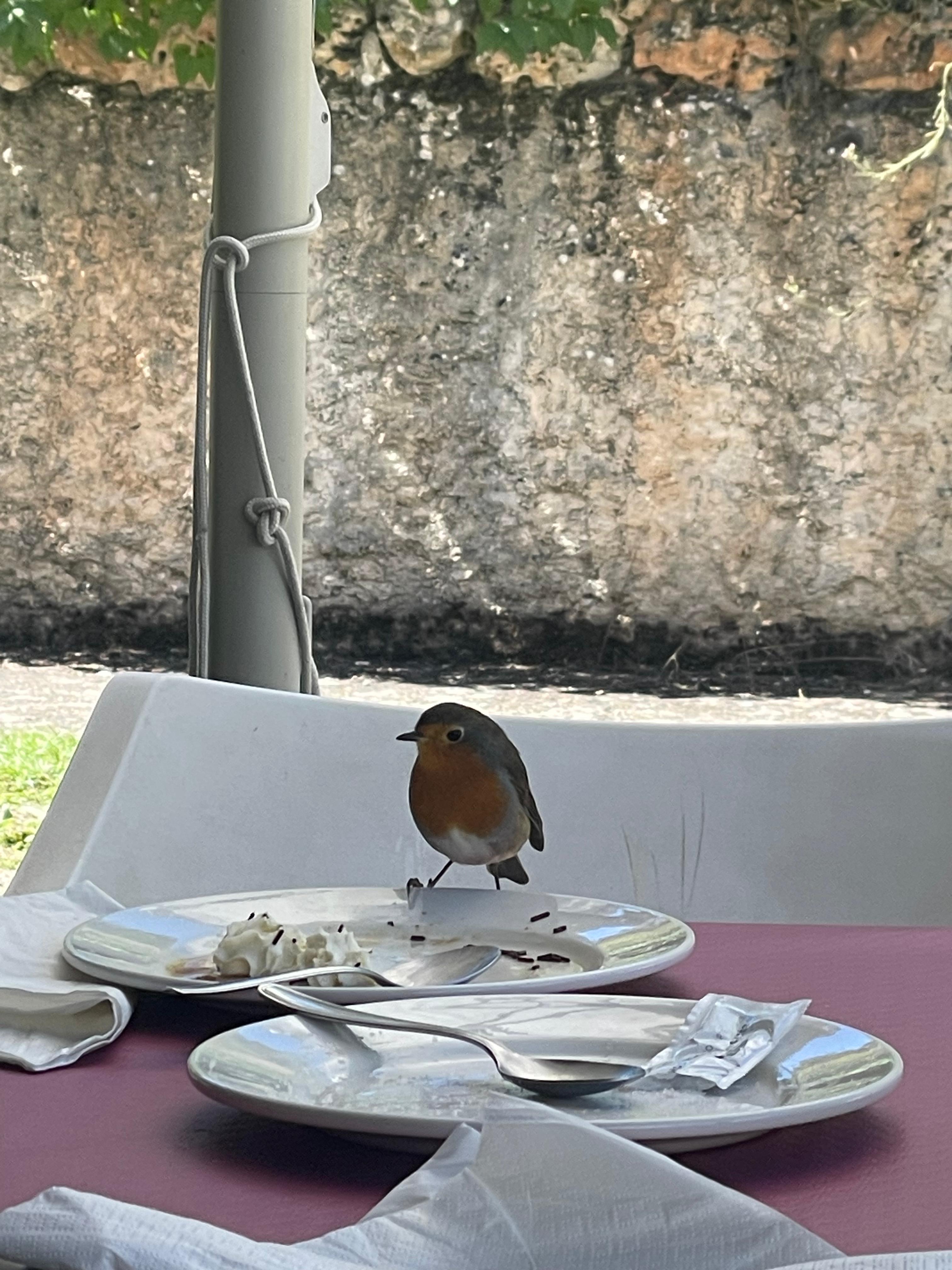
(Fotografía de CAP)


THOREAU, PRINCIPALMENTE: WALDENVerdaderamente, nuestra conversaci...: WALDEN Verdaderamente, nuestra conversación es ajena al lenguaje, solo el oído entrenado puede captar las palabras que rompen y mu...


Toda llama, de diferente materia que nazca, solloza, y, según se va haciendo, va dejando de sollozar, y su rumor se hace ritmo de palpitar leve; se va haciendo llama silenciosa ganando vida; luz de contenido arder.
MZ
Aunque la sucesión no sabemos de dónde arranca,sabemos que termina en nuestro origen.La libertad es un despliegue.Vamos creciendo hacia los muertos.Ellos son la cadena de nieve, y la cadena de nieve que a ellos nos une es nuestro propio crecimiento.
LR (El contenido del corazón, XXIV)
REQUIEM
1.
No volveremos a ver
La hierba segada caída detrás de él
Sobre las colinas tranquilas antes de anochecer
Ni oiremos su risa sobre los surcos del grano
Ni conoceremos el género de su satisfacción
Aunque los campos verdes sean mi satisfacción
La elegía es mi destino. Me he convertido
En superviviente de muchos y de tanto
Que amo, que no viviré para verlo
Volver de nuevo en este mundo
Cosas que me importaron una vez
No me importarán más
Porque he abandonado la orilla segura.
Donde la magnificiencia del arte
Podría bastar a mi corazón
2.
En el día de su obra
Cuando la gracia del mundo
Estuvo sobre él, hizo su camino,
No mirando atrás o a los lados.
Luz en su paso.
Pueda ahora la gracia de la muerte
Estar sobre él, su espíritu bendecido
En la profunda canción del mundo
Y las estrellas que vuelven, las estaciones
Que regresan, y el largo descanso
WB (Traducción Guillermo Ruiz)
Fauré escribió sobre su réquiem: «Se ha dicho que mi réquiem no expresa el miedo a la muerte y ha habido quien lo ha llamado "un arrullo de la muerte". Pues bien, es que así es como veo yo la muerte: como una feliz liberación, una aspiración a una felicidad superior, antes que una penosa experiencia. La música de Gounod ha sido criticada por sus sobreinclinación hacia la ternura humana. Pero su naturaleza le predispone a sentirlo de esa manera: la emoción religiosa toma esta forma dentro de sí. ¿No es necesario aceptar la naturaleza del artista? En cuanto a mi Réquiem, quizás también he querido yo escapar del pensamiento más habitual, ¡después de tantos años acompañando al órgano servicios fúnebres! Me lo sé todo de memoria. Yo quise escribir algo diferente».

