"HAVE YOU THANKED GOD FOR THIS FAILURE ALREADY"?

"HAVE YOU THANKED GOD FOR THIS FAILURE ALREADY"?


The most sensitive musical instrument is the human soul. The next is the human voice. One must purify the soul until it begins to sound. A composer is a musical instrument and at the same time, a performer on that instrument. The instrument has to be in order to produce sound. One must start with that, not with the music. Through the music the composer can check whether his instrument is tuned and to what key it is tuned.
Suppose I try to describe faithfully the prospect which a strain of music exhibits to me. The field of my life becomes a boundless plain, glorious to tread, with no death nor disappointment at the end of it. All meanness and trivialness disappear. I become adequate to any deed. No particulars survive this expansion; persons do not survive it. In the light of this strain there is no thou nor I. We are actually lifted above ourselves.
HDT
[Journal, 15 January 1857]
Supón que trato de describir fielmente la perspectiva que unas notas de música me muestran. El campo de mi vida se convierte en una llanura sin fin, de recorrido glorioso y sin ninguna muerte ni contrariedad al final de ella. Toda la ruindad y trivialidad desaparecen. Me siento adecuado para cualquier objetivo. Nada sobrevive a esta expansión; las personas no sobreviven a ella. A luz de estas notas no hay distinción entre tú y yo. Somos elevados en ese momento por encima de nosotros mismos.
Diario 23 de Mayo de 1854
Te sentaste sobre la tierra como sobre un bote-escuchando música que no era de la tierra- sino que la gobernaba y concertaba. El hombre debería ser el arpa que habla. Cuando tus cuerdas estaban tensadas.
HDT
THOREAU, PRINCIPALMENTE: 30 DE SEPTIEMBRE DE 2006 Con la perspectiva del fut...: 30 DE SEPTIEMBRE DE 2006 Con la perspectiva del futuro o de lo posible, deberíamos vivir con bastante laxitud e indefinición, siendo nuestro...

Con la perspectiva del futuro o de lo
posible, deberíamos vivir con bastante laxitud e indefinición, siendo
nuestro contorno borroso y confuso por ese lado, como nuestras sombras
revelan una transpiración imperceptible hacia el sol.La volátil verdad
de nuestras palabras debería mostrar continuamente la inadecuación del
resto del enunciado.Su verdad es traducida de inmediato y sólo queda su
monumento literal.Las palabras que expresan nuestra fe y nuestra piedad
no están definidas; sin embargo, son significativas y fragantes como el
incienso para las naturalezas superiores.


"Y anota también, hermano León, cordero de Dios, que si aprendiéramos a hablar en el lenguaje de los ángeles, si conociéramos el curso de los astros y si se nos descubrieran todos los tesoros de la tierra, si descubriéramos el secreto de la vida de los pájaros, de los peces, de todos los animales, las personas, los árboles, las piedras y las aguas, anota que tampoco en esto estaría la alegría plena ...
Anota también que si fuéramos tan buenos predicadores que lográramos convertir a todos los paganos al Cristianismo, anota que tampoco en esto estaría la alegría plena...
...y así, transidos, helados y hambrientos nos quedamos hasta la mañana en medio de la nieve y el agua sin queja ... sólo entonces, hermano León..."
(Lev Tolstói: El camino de la vida. Edición y traducción de Selma Ancira)
"Surely joy is the condition of life"
HDT

Counterfeited philosophies have polluted all of your thoughts
Karl Marx has got ya by the throat, Henry Kissinger's got you tied up in knots.
(...)
You got unrighteous doctors dealing drugs that'll never cure your ills
(...)
The rich seduce the poor and the old are seduced by the young
(...)
You got gangsters in power and lawbreakers making rules.
(...)
There's a man up on a cross
("When you gonna wake up")
Have they counted the cost it’ll take to bring down
All their earthly principles they’re gonna have to abandon?
There’s a slow, slow train comin’ up around the bend
(...)
You can’t rely no more to be standin’ around waitin'
In the home of the brave
Jefferson turnin’ over in his grave
Fools glorifying themselves, trying to manipulate Satan
And there’s a slow, slow train comin’ up around the bend
(...)
Masters of the bluff and masters of the proposition
But the enemy I see
Wears a cloak of decency
All nonbelievers and men stealers talkin’ in the name of religion
(...)
I don’t care about economy
I don’t care about astronomy
But it sure do bother me to see my loved ones turning into puppets
There’s a slow, slow train comin’ up around the bend


(...)
Cuando los dos tiempos se unen, la desesperación.Cuando los dos tiempos se separan, la alegría.
(Alan Lightman, Los sueños de Einstein)
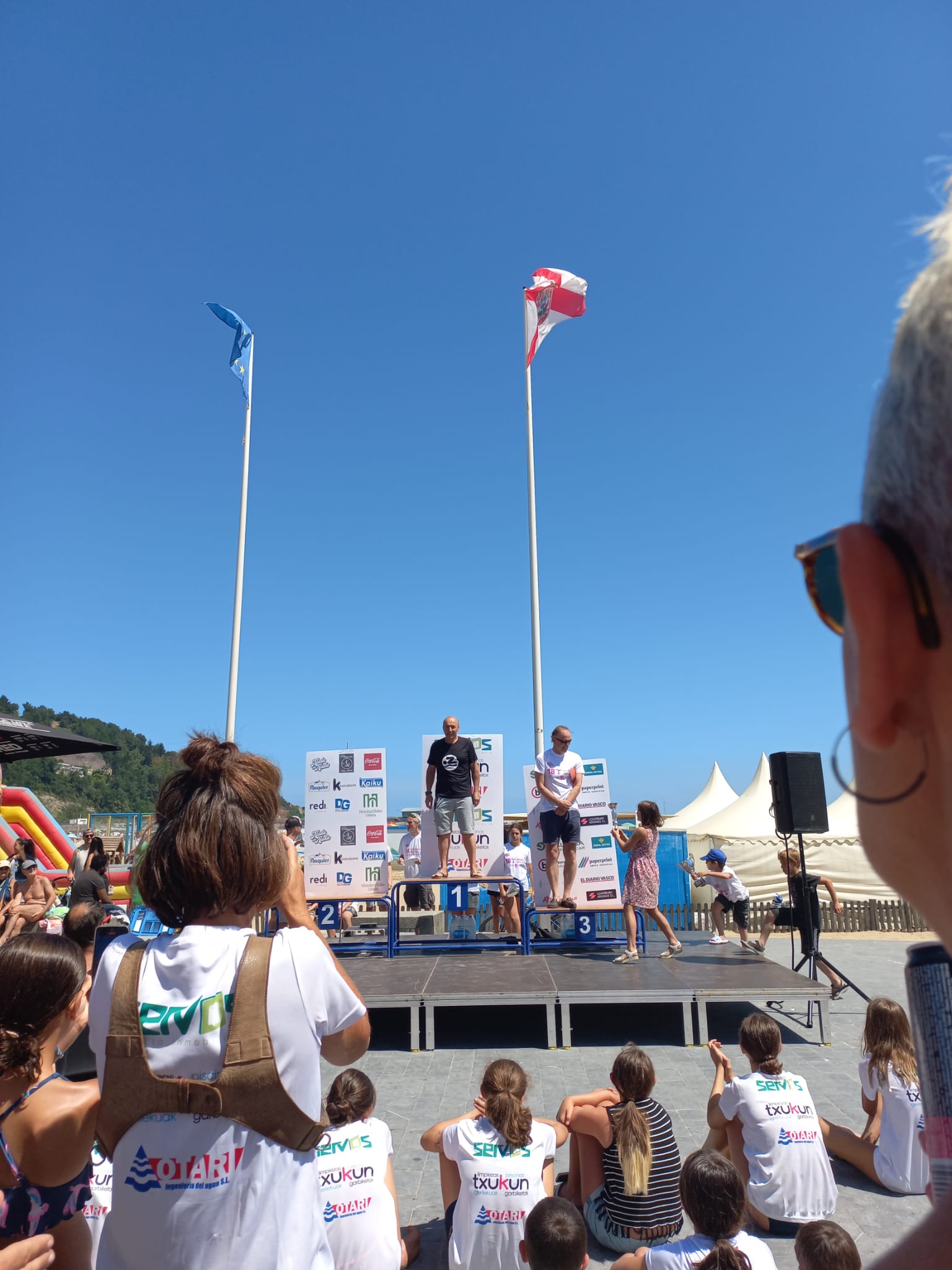
TXINGUDIKO BADIAKO XVII IGERIALDIA HELDUAK


"“What is your faith, Dad?” asked a middle-aged man, who stood by his cart on the same side of the raft.
“I have no kind of faith, because I believe no one—no one but myself,” said the old man as quickly and decidedly as before.
“How can you believe yourself?” Nekhludoff asked, entering into a conversation with him. “You might make a mistake.”
“Never in your life,” the old man said decidedly, with a toss of his head.
“Then why are there different faiths?” Nekhludoff asked.
“It’s just because men believe others and do not believe themselves that there are different faiths. I also believed others, and lost myself as in a swamp,—lost myself so that I had no hope of finding my way out. Old believers and new believers and Judaisers and Khlysty and Popovitzy, and Bespopovitzy and Avstriaks and Molokans and Skoptzy—every faith praises itself only, and so they all creep about like blind puppies. There are many faiths, but the spirit is one—in me and in you and in him. So that if every one believes himself (IF EVERYBODY'S TRUE TO HIMSELF) all will be united. Every one be himself, and all will be as one.”
The old man spoke loudly and often looked round, evidently wishing that as many as possible should hear him.
“And have you long held this faith?”
“I? A long time. This is the twenty-third year that they persecute me.”
“Persecute you? How?”
“As they persecuted Christ, so they persecute me. They seize me, and take me before the courts and before the priests, the Scribes and the Pharisees. Once they put me into a madhouse; but they can do nothing because I am free. They say, ‘What is your name?’ thinking I shall name myself. But I do not give myself a name. I have given up everything: I have no name, no place, no country, nor anything. I am just myself. ‘What is your name?’ ‘Man.’ ‘How old are you?’ I say, ‘I do not count my years and cannot count them, because I always was, I always shall be.’ ‘Who are your parents?’ ‘I have no parents except God and Mother Earth. God is my father.’ ‘And the Tsar? Do you recognise the Tsar?’ they say. I say, ‘Why not? He is his own Tsar, and I am my own Tsar.’ ‘Where’s the good of talking to him,’ they say, and I say, ‘I do not ask you to talk to me.’ And so they begin tormenting me.”
“And where are you going now?” asked Nekhludoff.
“Where God will lead me. I work when I can find work, and when I can’t I beg.” The old man noticed that the raft was approaching the bank and stopped, looking round at the bystanders with a look of triumph.
Nekhludoff got out his purse and offered some money to the old man, but he refused, saying:
“I do not accept this sort of thing—bread I do accept.”
“Well, then, excuse me.”
“There is nothing to excuse, you have not offended me. And it is not possible to offend me.” And the old man put the wallet he had taken off again on his back. Meanwhile, the post-cart had been landed and the horses harnessed.
“I wonder you should care to talk to him, sir,” said the driver, when Nekhludoff, having tipped the bowing ferryman, got into the cart again. “He is just a worthless tramp.”"
(Leo Tolstoy, Resurrection (1899-1900))