LIcencia Creative Commons

Showing posts with label SATYAJIT DAS. Show all posts

Friday, November 07, 2025

AI AND "REALISM IN POLITICS" (II)


La mayoría de los teóricos sociales de los siglos XIX y XX parten del supuesto naturalista de que los hombres están determinados causalmente, que son individualmente débiles y potencialmente omniscientes, que tan solo el conocimiento desvelará de forma progresiva su melancolía y su absoluta dependencia con respecto a una red de factores causales identificables, que el resto es megalomanía y engaño.Esta yerma doctrina no está basada en la observación o experiencia del comportamiento humano ni en el experimento social o en cualquier método empírico, sino en una vasta analogía con el resto de la naturaleza.Los estadistas de más éxito en la historia de la humanidad por lo general han asumido, lo supieran o no, lo opuesto: que los individuos eran en ocasiones fuertes (porque eso piensan de sí mismos y de sus principales oponentes), en gran parte ignorantes (ignorantes de la mayoría de los factores con los que se veían obligados a tratar, que eran asumidos sin que hubiera una conciencia de ello y con los que se trataba casi en la oscuridad) y, dentro de algunos límites,libres.Mientras los supuestos contrarios sean defendidos  por aquellos que creen en las reformas radicales en nombre-falsamente invocado- de la ciencia y la razón y de la observación pura de la naturaleza, los hombres seguirán siendo víctimas de teorías y abstracciones que son una forma de idolatría -y de sacrificio humano- más fría y más destructiva que las ilusiones y engaños inteligibles de anteriores generaciones, y por la que las generaciones futuras, con incredulidad e ira, condenarán justificadamente a nuestra época.

Isaiah Berlin (Realism in politics. Traducción Clara Morán Calvo-Sotelo) 


Grok Conversation

Replying to @ruiz_zapatero
  • This post features an artistic overlay of Alexander Herzen's 19th-century quote critiquing authoritarian system-builders on Ambrogio Lorenzetti's 1339 fresco "Allegory of Good Government," visually linking medieval ideals of just rule to warnings against oppressive expertise.
  • As part of a thread by Spanish lawyer Guillermo Ruiz Zapatero, it follows references to Lorenzetti's utopian Siena imagery and Manuel García-Pelayo's analysis of political myths, forming a meditation on freedom versus tyranny amid 2025's global political shifts.
  • Herzen's line, from his exile writings and echoed in Isaiah Berlin's essays, underscores a liberal insight: true societal progress demands creators untainted by carceral mindsets  

TRUMP’S DILEMMA: TO BAILOUT OR NOT TO BAILOUT THE AI BUBBLE

JustDario 

Clearly, the major cause of concern lies in the overvaluation of all stocks tied to the AI bubble, starting from Nvidia, which drove the vast majority of the stock market gains for quite some time. Back in January, in “THE REAL ERA OF AI BEGINS, THE ONE OF THE AI CHARLATANS ENDS“, I warned about how the direction taken by US companies towards putting all their efforts into overbuilding a massive data center infrastructure, while ignoring the importance of software and data quality in the development of AI, would ultimately yield very little if not negligible returns despite the biblical amount of money being invested and planned to be invested in such an effort. Back at that time, investors did not immediately dismiss the huge DeepSeek breakthrough in achieving what the likes of OpenAI did with a fraction of the cost, but it did not last long, and after the April stock market rout, the euphoria was back in charge.

Acknowledging that China’s approach to building AI was the right one would have thrown a wrench into the whole narrative that allowed the likes of Nvidia and OpenAI to achieve unimaginable valuations. As a consequence, everyone on the western side of the world spent an incredible amount of resources to hide the truth and convince the investor audience of the opposite. All I am describing was corroborated by the biggest revenue round-tripping scheme among mega-cap companies ever orchestrated. A scheme that is still being called by the milder term “circular financing” that nobody dares to deny anymore. The ultimate result of all this reckless behavior, which, let’s be honest, had the sole purpose of inflating public and private companies’ valuations as much as possible, was what I described in: “THE DATA CENTERS FRENZY WILL BE REMEMBERED AS THE LARGEST WASTE OF CAPITAL IN HISTORY

 Currently, the US government has almost $1 trillion of resources in the US TGA account. Do you think they will keep this money out of the market, watching the bubble collapse, or, like the Biden administration did twice, will they be willing to drain the US TGA account all the way down to zero in an ultimate effort to support the stock market and avoid the burst of the bubble as long as possible (ideally till US midterm elections)?


Politically speaking, spending public money to socialize losses of a sector that has already set itself on a path doomed to fail, that will require immense energy resources to run, and that will ultimately cause severe employment problems, won’t bode well with voters. The ultimate proof of how wrong US companies’ approach to building AI has been is demonstrated by 80% of the startups in the US currently using open source Chinese models to build their tech, not US ones (“China is quietly upstaging America with its open models“).
 
The dilemma the US administration is currently facing—to bailout or not to bailout its prominent AI players—will have to be resolved sooner or later. In my opinion, the greater the market correction caused by the bubble deflating, the greater the pressure on the US administration to do something, especially when stock losses start significantly impacting retirement savings. But for sure, whatever they will be doing will only bring temporary relief, compounding the problems in the future caused by the never-ending misplacement of capital caused by public bailouts of companies that instead should be let fail, allowing the system to cleanse and to put itself back on a more stable and sustainable footing upon which it can resume sustainably growing in the long run.

Unbearable lightness of the AI bubble

Satyajit Das 

The AI investment bubble is much bigger than those around dot-coms or sub-prime assets in the 2000s. Many aspects—from the technology to its finances—are not squaring up
 
Capital expenditure on AI is expected to total up to $5-7 trillion by 2030. It has added around 40 percent or a full percentage point to 2025 US growth. AI companies accounts for 80 percent of US stock returns. AI startup valuations based on the latest round of funding were $2.30 trillion, up from $1.69 trillion in 2024, and up from $469 billion in 2020. But AI’s capacity to generate cash and returns on the large required investment remains questionable. 
 
 Revenues would have to grow over 20 times from the current $15-20 billion a year to cover the current investment in land, building, rapidly depreciating chips, and power and water. Revenues totalling more than $1 trillion may be required to earn an adequate return. Microsoft’s Windows and Office, among the world’s most used software, generates less than $100 billion in commercial and consumer revenue. Less than 3 percent of its 800 million users currently pay to use ChatGPT.
 
In the first half of 2025, OpenAI, owner of ChatGPT, generated $4.3 billion in revenue, but spent $2 billion on sales and marketing and nearly $2.5 billion on stock-based compensation, posting an operating loss of $7.8 billion.
 
AI investment may be 17 times that of the 2000 dot-com and four times the 2008 sub-prime housing bubble. Rather than equity, it is funded by debt with the amount tied to AI totalling around $1.2 trillion, 14 percent of all investment-grade debt.

Investors have convinced themselves that the greater risk is underinvesting, not overinvesting. Amazon founder Jeff Bezos hails it a “good kind of bubble”, arguing that the money spent will bring long-term returns and deliver gigantic benefits to society—the tech-bro’s persistent bromide. But the share of used fibre-optic capacity is around 50 percent and the average global network use is 26 percent. When that boom ended, Microsoft, Apple, Oracle, and Amazon fell 65, 80, 88 percent, and 94 percent, respectively, taking 16, 5, 14 and 7 years to recover their 2000 peaks.

Consensual hallucinations notwithstanding, it would be surprising if the ending is different this time.

Friday, July 12, 2024

LA ECONOMÍA DE LAS CAMBIANTES GUERRAS DE DESGASTE ((II), EL DECLIVE INEVITABLE DEL DÓLAR)


Like Mark Twain said about himself, the report of the dollar’s death is exaggerated—though its health problems are multiplying.

 About 60 percent of international and foreign currency claims (primarily loans) and liabilities (primarily deposits) are in US dollars. Its share of foreign exchange transactions is around 90 percent. US dollars constitute around 60 percent of global official foreign reserves. These shares are disproportionate to the size of the US economy (around a quarter of global GDP, or 15 percent adjusted for purchasing power).

The dollar’s difficulties are largely self-inflicted. Incontinent fiscal and monetary policy—with the US budget deficit and government debt at around 7 percent and over 100 per cent of GDP, respectively—has diminished long-term purchasing power of the dollar. Since 1972, it has fallen by 99 percent against gold and lost 90 percent of purchasing power of real goods and services.

In the wake of the Ukraine war, the US and its allies have frozen $300 billion of Russian central bank dollar holdings. The Biden administration passed the REPO Act authorising the confiscation of about $20 billion worth of Russian assets held by US banks, primarily government securities that were legitimately purchased, and transferring it to Ukraine. Selective cancellation of US government obligations held by a foreign power is now a policy option, despite its doubtful legal basis. It would represent a selective US government default.

These factors are driving foreign public and private institutions’ increasing reluctance to transact in dollars or hold dollar assets. But American authorities assume continuation of the dollar hegemony because of limited alternatives.

Two principles lie at its heart. The first is the ‘policy trilemma’ or ‘impossible trinity’ proposition of economists Robert Mundell and Marcus Fleming. It argues an economy cannot simultaneously maintain the following—a fixed exchange rate, free capital movement and an independent monetary policy. The second is the paradox named after economist Robert Triffin. This states that where its money functions as the global reserve currency, a nation must run large trade deficits to meet the demand for reserves. Any aspirant to a new global reserve currency status faces an unacceptable loss of economic control and must run large current account deficits.

Russia’s MIR and China’s Cross-Border Interbank Payment System offer alternative fund transfer arrangements. Nations are denominating trade in different currencies. China has reduced its US Treasury holdings to below $800 billion, down 40 percent from a decade earlier. Foreign investors have moved into real assets, primarily business and commodities. The Chinese Belt and Road Initiative is one example. Central bank purchases of gold and other currencies reflect these pressures. But the biggest change may be fundamental.

A trading and reserve currency is needed due to imbalances. Where India imports more than it exports to China, if denominated in rupees, would leave the Chinese with surplus Indian currency. Alternatively, if denominated in Chinese yuan, India would have to finance the deficit. This requires unfettered access to investments or funding in respective currencies. If trade is more bilaterally balanced over time, then there would be no surpluses to invest or deficits to finance, reducing the need for a reserve currency such as dollars.

The structure can be extended to encompass trading blocs, where imbalances net out between members when aggregated. It implies a world of multiple trading and reserve currencies, which has existed at various times in history.

A world based around bilateral or multilateral autarky has implications for growth and development. Trade and capital flow volumes would fall. It would diminish the ability to trade freely as well as sourcing investment capital for growing economies. Comparative advantages would be lost. But this approach is implicit in the evolving industrial structure driven by sovereignty and economic independence concerns.

The diminution of the dollar’s status would affect the US’s ability to fund its continuing budget and trade deficits. Dollar interest rates may have to rise and the currency devalue. The role of its capital markets and financial institutions would decline. American political prestige and power would suffer.

For the moment, America believes the dollar’s reserve currency status is secure. Given its economic, political and social problems, this belief will be tested. All major economic shifts go through phases—impossible, unlikely, plausible, likely and finally, inevitable. The dollar is progressing through these stages.

Satyahit Das


One young man of my acquaintance, who has inherited some acres, told me that he thought he should live as I did, if he had the means. I would not have any one adopt my mode of living on any account; for, besides that before he has fairly learned it I may have found out another for myself, I desire that there may be as many different persons in the world as possible; but I would have each one be very careful to find out and pursue his own way, and not his father’s or his mother’s or his neighbor’s instead. The youth may build or plant or sail, only let him not be hindered from doing that which he tells me he would like to do. It is by a mathematical point only that we are wise, as the sailor or the fugitive slave keeps the polestar in his eye; but that is sufficient guidance for all our life. We may not arrive at our port within a calculable period, but we would preserve the true course.

(...)

I read in the Gulistan, or Flower Garden, of Sheik Sadi of Shiraz, that “They asked a wise man, saying: Of the many celebrated trees which the Most High God has created lofty and umbrageous, they call none azad, or free, excepting the cypress, which bears no fruit; what mystery is there in this? He replied; Each has its appropriate produce, and appointed season, during the continuance of which it is fresh and blooming, and during their absence dry and withered; to neither of which states is the cypress exposed, being always flourishing; and of this nature are the azads, or religious independents.—Fix not thy heart on that which is transitory; for the Dijlah, or Tigris, will continue to flow through Bagdad after the race of caliphs is extinct: if thy hand has plenty, be liberal as the date tree; but if it affords nothing to give away, be an azad, or free man, like the cypress.”

(HDT.Walden, Economy


LA ECONOMÍA DE LAS CAMBIANTES GUERRAS DE DESGASTE (SATYAJIT DAS, (I))

Express illustration | Sourav Roy
Updated on: 


Modern warfare—with its interplay of industry, economics and geopolitics—is too dangerous to leave to generals. 

Economics underlies the ability to sustain conflict. Western-equipped Ukraine and Israel possess superior conventional firepower. But asymmetric warfare and low-tech improvisation using cheap drones and missiles can alter the balance, especially by calibrating escalation of hostilities.

Israel expended an estimated $1.4 billion in munitions and fuel (around 6 percent of its annual defence budget) to repulse Iran’s choreographed attack that cost perhaps $30 million. The Houthis in Yemen have disrupted transport routes using cheap drones.

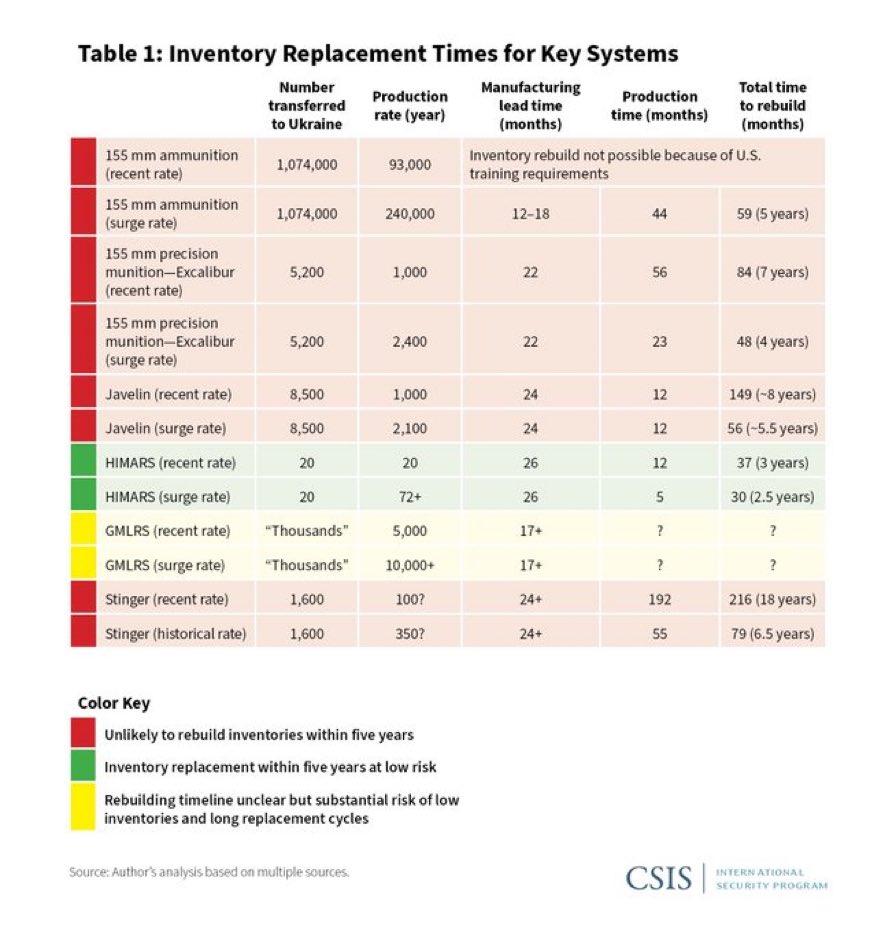
 A ‘boys with toys’ syndrome drives a touching faith in expensive high-tech weapons. The difficult-to-maintain-and-operate F35 jets cost around $150 million each. The Patriot air defence system costs over $1 billion, with each interceptor missile costing a further $6-10 million. Heavy battle tanks are $6-10 million each. Individual artillery rounds cost $3,000-5,000. Western weapons are frequently double the cost of Russian and Chinese equivalents. 

Degrading the ability to finance military action is essential. Russia’s targeting of industrial and agricultural infrastructure combined with the displacement of manpower has reduced Ukrainian output by 30-35 percent. The cost of rebuilding is around $500 billion. Ukraine will need to restructure the country’s $20 billion international debt to avoid default.

Obliteration of the impoverished, aid-reliant Gaza is economically pointless except to drive residents out, paving the way ultimately for Jewish settlement. In contrast, Israel’s economy has shrunk, by perhaps 20 percent.

The $50-billion-plus cost to date (10 percent of GDP) of the conflict has substantially increased Israel’s debt and its credit rating has been downgraded.

Ukraine and Israel are reliant on Western backers. The US, NATO and their allies have provided Ukraine with over $175 billion in military, financial and humanitarian aid, primarily financed by government borrowings. Many European nations are in breach of EU-mandated debt limits. Since its founding, Israel, despite its high income, has been the largest cumulative recipient of US foreign aid—$300 billion (adjusted for inflation) in total economic and military assistance and loan guarantees. Lip-service to freedom and holocaust guilt notwithstanding, donors cannot afford this

The US pushed for Saudi Arabia to normalise relations with Israel, reducing the threat from an united Arab front. Saudi Arabia might get a defence pact with the US and support for nuclear ambitions. It would improve its access to overseas investment and Israeli tech as well as offsetting Iran’s regional influence.

The real unstated imperative is protection of Arab monarchies and their wealth in the West. Given that over 90 percent of their population support the Palestinian cause, a perceived betrayal risks a new ‘Arab Spring’.

Such instability, which investors do not countenance, poses serious risks to global economy. The Gulf states hold 30 percent and 21 percent of global oil and natural gas reserves, respectively. Energy prices would be affected, especially if weaponised as in the 1970s. It would affect Suez Canal trade. Since the start of the Gaza war, the cost of transporting a container from China to Europe has quadrupled from $1,000 to $4,000 and added up to two weeks in travel time.

But if the Arab states unite against Israel, then an escalation in the conflict is also possible, with similar outcomes. Terror actions by non-state actors against Western targets is an ever-present risk.

As Sun Tzu outlined in the Art of War, those wishing to fight must first understand the cost.


Wednesday, October 25, 2023

"YOU MAY NOT BE INTERESTED IN WAR BUT WAR IS INTERESTED IN YOU" (TROSTKI APOCRYPHE)


Gaza conflict poses grave risks for weak global economy; even Nostradamus would be stumped


As with Ukraine, the Gaza conflict will divide the world as countries take sides. This reflects historical allegiances but often erroneous readings of national interest and a desire to maximise domestic electoral advantage. Such events expose deep-seated hypocrisy and double standards, over issues like supply of armaments, war crimes and humanitarian concerns, heightening divisions.

America may find itself weakened. Its unequivocal support for Israel undermines its ability to play a role in the Arab Middle East. Qatar, UAE, Saudi Arabia, Jordan and Egypt, which have sought to defuse tensions in the region, will find it difficult to engage with a United States which at the first provocation immediately and unthinkingly reverts to partisan positions irrespective of wider implications. Middle East rulers also remain wary of the existential threat to their regimes from American encouraged colour revolutions and the ill-fated Arab spring.

The shift of resources to Israel, potentially abandoning Ukraine, raises questions about the USA's capabilities. Countries reliant on American military protection (Europe, Japan, South Korea, Taiwan, Australia and the Gulf states) as well as competitors (China and Russia) will have taken note.

 Unstable leadership, and dysfunctional legislative processes and foreign policy inconsistency undermines US credibility with allies and enemies alike.

These political factors will shape the economics through several channels, primarily the disruption of trade and commerce which requires relative geo-political stability to thrive.

First, trade, already slowing, may weaken further.

 Second, inflationary pressures may return. With recent improvements driven mainly by lower energy prices, the Gaza conflict combined with ongoing restrictions on Russia has the potential to drive energy costs higher. In the worst case, a circa-1974 oil embargo or blockades of the Straits of Hormuz and the Suez Canal would change price dynamics dramatically.

 hird, public finances may deteriorate. The post-1989 economy reaped the benefits of a 'peace dividend' as defence spending declined from around 5.5 percent of Gross Domestic Product ("GDP") in 1989 to 2.6 percent of GDP in 2000. This will now reverse undermining more productive sectors of the economy. With government revenues stagnant, countries will move further into deficit and debt.

Fourth, the dollar's role as the dominant currency for trade and investment of reserve assets will be affected. Sanctions, exclusion from payment mechanisms and seizure of assets mean a search for alternatives. While the dollar's demise is not imminent, attempts by countries to establish new trading arrangements, denominate trade in their own currency, establish alternative funds transfer systems and rebalance reserves away from the dollar will accelerate. The likely fragmentation of global capital flows will affect debtor countries like the US which need to finance a significant portion of its budget and trade deficit (around 8 percent of GDP combined) externally.

 Global bodies like the United Nations or G-pick a number, will lose influence as alternatives such as the BRIC+ compete for hegemony.


Satyajit Das is a former banker and author of numerous works on derivatives and several general titles: Traders, Guns & Money: Knowns and Unknowns in the Dazzling World of Derivatives  (2006 and 2010), Extreme Money: The Masters of the Universe and the Cult of Risk (2011), A Banquet of Consequences RELOADED (2021) and Fortune’s Fool: Australia’s Choices (2022). His columns have appeared in the Financial TimesBloomberg,WSJ Marketwatch, The Guardian, The Independent,Nikkei Asia and other publications. 

© 2023 Satyajit Das. All Rights Reserved

 https://www.newindianexpress.com/opinions/2023/oct/21/gaza-conflict-poses-grave-risks-for-weak-global-economy-even-nostradamus-would-be-stumped-2625743.html